Beginning in the 7th century and continuing rapidly onward, especially when the West was struggling in many aspects during the Dark Ages1, the Muslim civilization was progressing rapidly. While the West was struggling and in a period of drawbacks, Muslims were making large, influential scientific and cultural developments (Al-Hassani, 6). All of the new discoveries in the Islamic world were flourishing and they were contributing to the European Renaissance. The unfortunate reality, however, is that many accept the idea that inventions and discoveries just appeared during the Renaissance “as if by miracle” (Al-Hassani, 10). Because the West has so much misunderstanding about Islam in general, many Westerners ignore the great influence Muslim figures had on Western culture and civilization (Al-Hassani, 10).
1 – A historical period in which the Western world suffered demographic, cultural, and economic collapse after the decline of the Roman Empire. It was a stagnant period of no discoveries or advancements. The years of great Muslim advancements and conquests.
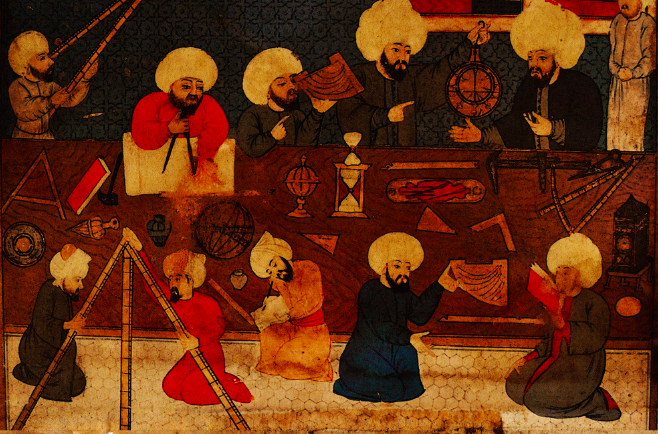
The period of time when most of the major discoveries and inventions were being made by Muslims is known as the Golden Age. This was a period of time when Muslim scholars, but also scholars of different faiths, expanded the knowledge of ancient Egypt, Mesopotamia, Persia, China, India, and other nations, which would later pave the way for the European Renaissance (Al-Hassani, 19). During the Golden Age, the most successful years were those under the rule of the Caliph Al-Mamun (Massoud, 55). He promoted science more than any other caliph and encouraged investments to be made into new scientific knowledge. This is proven by the fact that he once he obtained victory against the Byzantines, he asked for nothing but a copy of Ptolemy’s book of astronomy, the Almagest, and turning down gold or valuables (Massoud, 56). Contrary to popular belief, important figures who were strong advocates of expanding knowledge existed in the Muslim world too, as seen here by Al-Mamun. Academies such as the House of Wisdom were also founded to provide a space for Muslim, Christian, and Jewish scholars to translate knowledge of Hippocrates and Aristotle and encourage new scientific discoveries (Al-Hassani, 18).

 Muslim Influence in Modern Western Science