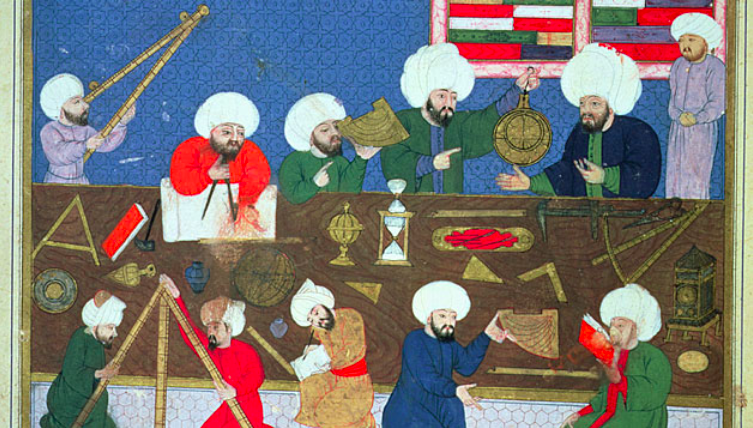
(1001 Inventions: The Enduring Legacy of Muslim Civilizations)
“When other nations were afraid of ideas, this [Islamic] civilization thrived on them, and kept them alive. When censors threatened to wipe out knowledge from past civilizations, this civilization kept the knowledge alive, and passed it on to others.”
-Carly Fiorina
From chemistry, astronomy, to medicine, advances are made in science daily, but it is often forgotten that those who contributed immensely to these fields in their earliest days were none other than Muslim scientists. This paper will examine all of the various ways in which the field of science was influenced by the medieval Muslim civilization which was flourishing with scholars and wise men. To do so, this paper looks specifically at 1001 Inventions: The Enduring Legacy of Muslim Civilization by Salim Al-Hassani and Science and Islam: A History by Ehsan Masood, along with various other publications. This study will utilize a literary analysis in order to accurately portray the argument of the major influence of Islam in the scientific world. The following paper argues that while many may ignore the relevance of Islam to science, after a proper investigation of the roots of certain discoveries and inventions, the debt the Western world owes to the Islamic world for its scientific influence cannot be denied. This study is important because in a field like science that advances so rapidly, it is crucial to give credit to those who discovered the building blocks which allow us to make groundbreaking discoveries today.
The purpose of this blog is to provide an outlet to learn more about the vast role Islamic inventors, scholars, and philosophers played in the world of science – namely the science that the West claims to have discovered on its own.
 Muslim Influence in Modern Western Science